General News
31 May, 2025
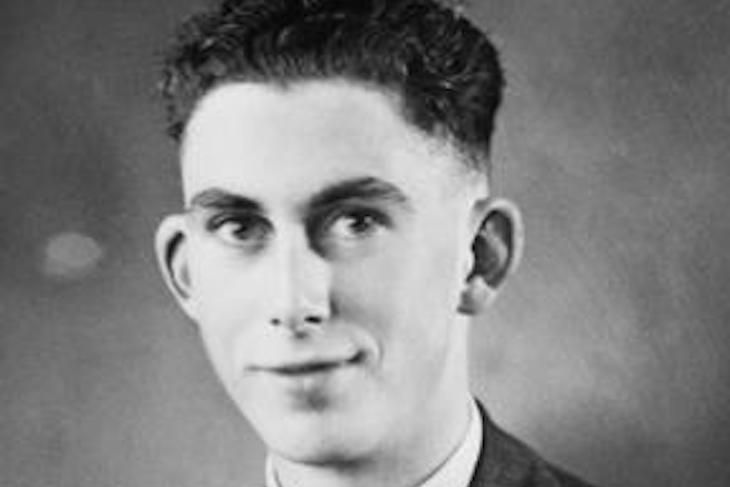
VETERANS' VOICES: Willard Field Garton
Willard Field Garton was born on May 28 1924 to Leonard Ernest and Maud Minnie Garton of Mirranatwa.
Mirranatwa is near Mt Thackery, Mt William and Lake Muirhead, off the Henty Highway.
Willard’s occupation at the time of his enlistment was mill hand.
Willard Field Garton enlisted before July 30 1942 at Dunkeld.
He registered at 1 Recruitment Centre RAAF in Melbourne.
His service number was 59768.
He was posted from 1 Recruitment Centre to 11 School Technical Training (ISTT).
His last unit was 11 School Technical Training (ISTT) Melbourne in 1 Training Group V on July 30 1942.
His rank was aircraftman 1 (AC1), a training rank.
Willard was admitted to hospital with the dangerous illness laryngeal diptheria.
Willard died on August 13 1942 at Queens Memorial Infectious Diseases Hospital, Fairfield, aged 18 years.
Willard Field Garton is buried in the Methodist plot, at W, in grave 21 (GRM/3) of Dunkeld Cemetery.
No 1 Recruit Training Unit
The role of No 1 Recruit Training Unit (1RTU) was, and remains, to prepare recruits – newly enlisted air force men and women – for military service.
Recruit training involves transforming civilians into aviators who have basic military skills, knowledge and behaviours to become effective members of the air force team.
This transformation occurs over nine weeks of training.
Aircraftman ranks
The rank of aircraftman was introduced to the RAF in January 1919, replacing the ranks of air mechanic, private and clerk that had been introduced under Air Memorandum No 1 in March 1918.
There were three grades: leading aircraftman (LAC), aircraftman 1st class (AC1) and aircraftman 2nd class.
A similar grading existed for junior ratings in the Royal Navy.
The rank of senior aircraftman (SAC) was introduced on January 1 1951, aircraftman becoming the entry rank.
Leading aircraftmen and women did everything from maintaining aircraft to cooking and basic clerical tasks.
No 1 School of Technical Training RAAF
On December 17 1939 the Training Centre Barracks was formed at the old Melbourne Junior Technical School, West Melbourne, as a sub-unit of the Training Depot.
The staff consisted of 18 personnel, with 10 cooks under training and 97 technical trainees waiting to commence the No 1 Fitters Course.
On January 29 1940 the unit was designated as 1 School of Technical Training.
Training was provided in many disciplines such as W/T operators, electricians, instrument makers, instrument repairers, fitters, cooks, X-ray technicians, welders and mess stewards, and also a course to train personnel in high-frequency direction finding.
Courses in teleprinter maintenance, PMC maintenance, Bristol gun turrets, wireless mechanics and meteorological charting were added later.
Training was undertaken at several institutions, including Brunswick Technical College, Amalgamated Wireless (Australia) School, Footscray Technical College and Emily McPherson School of Domestic Economy.
With inadequate facilities and overcrowding, the unit moved to the Exhibition Building in Carlton in March 1941, although a detachment remained behind until the facilities occupied by them were transferred to WAAAF trainees in October 1941.
On August 29 1945 training ceased for course members who had not completed more than 50 per cent of their training.
By the end of October 1945, 21,324 trainees had graduated from No 1 School of Technical Training.
The school was disbanded on December 22 1945.
Laryngeal diphtheria
Laryngeal diphtheria affects the voice-box.
It most commonly occurs in children and is characterised by gradually increasing hoarseness and stridor (noisy breathing).
Nasal diphtheria is usually a mild but chronic illness.
It is characterised by a nasal discharge which starts out clear but later becomes blood-stained.
Queens Memorial Infectious Diseases Hospital
Fairfield Infectious Diseases Hospital, originally known as Queens Memorial Infectious Diseases Hospital, operated from 1904 until its closure in 1996.
Perched high on the banks of the Yarra River at Yarra Bend in inner-Melbourne Fairfield, it developed an international reputation for the research and treatment of infectious diseases.
When it closed, it was the last specific infectious diseases hospital in Australia.
Initially the hospital was devoted to the treatment of patients with fevers.
Diseases treated included typhoid, diphtheria, cholera, smallpox, poliomyelitis and scarlet fever, and in its final years HIV/AIDS became very prominent.
With thanks: Sally Bertram, RSL Military History Library. Contact Sally at sj.bertram@hotmail.com or call 0409 351 940.