General News
13 March, 2026
Renewable energy transition debate
A forum hosted by the Wimmera Australians in Retirement, held on Wednesday, March 11, in Horsham, attracted about 50 people to hear a panel discuss the transition to renewable energy in the region.
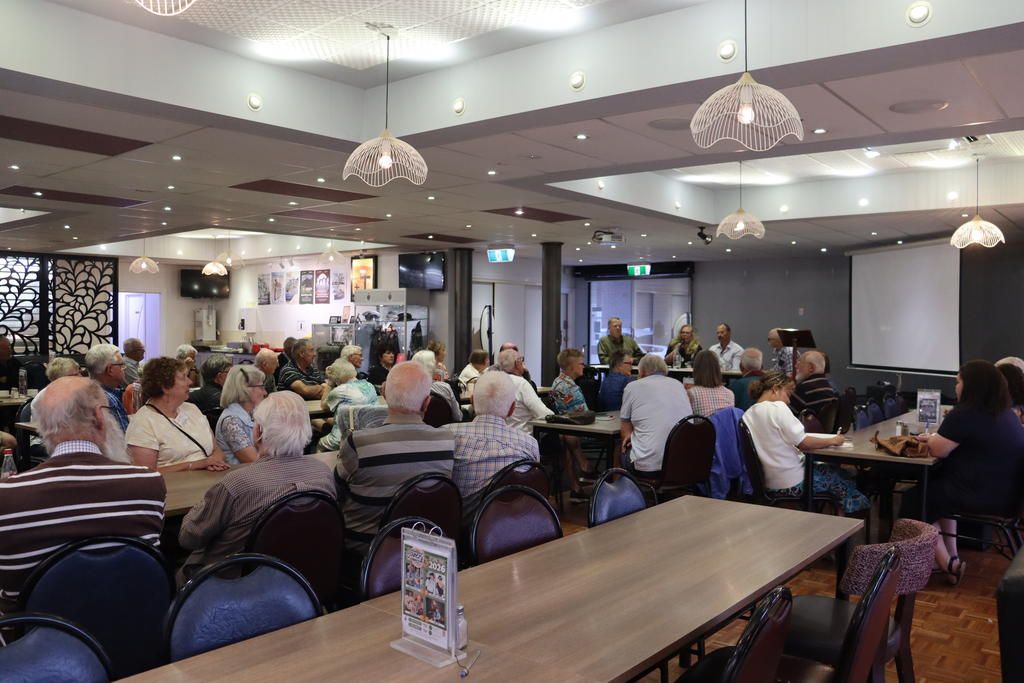
David Jochinke shared his experience as a wind turbine host, while Wimmera Southern Mallee Development chair, Chris Sounness, spoke about the role the WSMD played in renewable energy in the Wimmera.
Nexa Advisory principal and founder, Stephanie Bashir, explained her role in the renewable energy transition.
Nexa is an advisory firm that describes itself as an entity with an “unwavering focus on accelerating the clean energy transition,” and its mission is “to get Australia’s clean energy transition done".
Their bio states their mission aims for a secure, reliable, and affordable power for consumers of all types.
They claim to support and direct stakeholders' dialogue to remove roadblocks to the transition.
Ms Bashir explained that the ever-increasing power bills being experienced by households and businesses were due to delays in completing the VNI-West transmission line.
She said the transmission line was a necessity to achieve the transition to renewables and was, at this stage, the missing link in the progress to renewable energy in the Wimmera and Horsham.
Her answer to the delays by those opposing the project crossing agricultural land was to get a seat at the table, and she said they deserved a conversation.
Comments about getting a seat at the table frustrated Horsham Rural City councillor Ian Ross.
“We, as a council, have had numerous seats at the table,” he said.
“I have met in my capacity as the former mayor with numerous MPs, ministers, and project managers for mining, transmission lines, and renewables.
“These people here today addressing us are obviously unaware of exactly what we have been doing.”
Cr Ross also highlighted that the lower council rates paid by the proponents created a significant financial loss to councils and the community.
“They get cheaper rates to produce power for the cities. How do we manage that?" he asked.
Ms Bashir said she acknowledged that this topic was controversial in the region and that the conversation had not been handled well from the outset.
"The proponents and the government underestimated the importance of getting the conversation tight from the beginning," she said.
Ms Bashir added that communities had already embraced the transition to renewables by their uptake of solar panels and batteries on homes and businesses through the Federal Government home battery scheme, and this was an extension of that.
Mr Jochinke is a former VFF and NFF president and has wind turbines and a transmission line on his farm. He introduced himself as a capitalist.
“Everything I do is to make money,” he said.
He also said he does a lot for free and that was his socialist contribution, but if hosting turbines on his land made him some money, he could not see why he shouldn’t do that.
He said in describing the process he and neighbouring landowners took when deciding to host turbines for the Murra Wirra Wind Farm, they collaborated and made sure they got as much as possible in writing so they could back up any agreements that had been made.
Mr Jochinke said there were some things he did not get right in the process, and he was not happy that some of those had not been addressed in subsequent projects.
He accepted that recycling after decommissioning of the turbines was still being researched, and until there were more in Australia, the technology to bring to Australia to do that was financially prohibitive.
However, the 2500-ton concrete base would remain in the ground forever.
He said neighbouring landowners inside the buffer zones should be compensated in future projects.
“It’s too late for our neighbours, but it should apply to current and future projects,” Mr Jochinke said.
Mr Sounness described the transition to renewables in the region, he used analogies from 1968, the era of the Kingswood Holdens, which had no seat belts and sticky vinyl seats with four kids and grandma in the back, as to how change happens and comes mostly from external forces.
“We have dilapidated shearing sheds across the Wimmera that are no longer used, and that is another sign of the changes we have gone through and is again from external forces of wool prices and farm consolidation, and none of these required a town hall meeting,” he said.
”Noisms get less, we must talk, we must get a seat at the table.”
He explained that his role was to benefit the community, and change was inevitable.
All panellists agreed the agriculture industry had been ignored as an entity of its own and instead had been included in the community, instead of being recognised as a separate industry to be respected and considered.
“The way the agricultural industry has been treated in the Wimmera has been disgraceful,” Mr Johinche said.
“Transparency has not been given to the people by the proponents.
“We are not bystanders, we are in this.”
Kathy Ross said she thought the panellists had a conflict of interest through being a host or other means.
Mrs Ross said promoting renewables as clean, green energy was wrong and named some of the contaminants she believed were present in the solar farm panels, wind turbines, and radioactive materials through mining.
Mr Jochinke suggested that attendees check out ChatGPT for answers if they did not want to take the panel’s word for it.
Jill Taylor attended the forum and asked why farmers' rights were not being respected by the panel or the proponents.
"There was no democracy at that meeting, there was no two-way freedom of speech, and it's really what we have come to expect, unfortunately," she said.
Questions from the floor included why coal was not being continued as an energy source and why nuclear energy was not an option.
Ms Bashir said that maintenance and unreliability with coal was cost-prohibitive, and so was the transition to nuclear, as well as the time factor due to the urgency caused by the failing current coal energy system.
She said the VNI-West transmission line was the missing link and had to proceed.
Other questions included the effect caveats had on host properties, land valuation of host and neighbouring properties, decommissioning of turbines, and the possible contamination of agricultural land.
While unable to attend the forum, HRCC mayor Brian Klowss said he and councillors had met with Alistair Parker from Vic Grid to discuss the VNI-West transmission line and the issues surrounding its current route.
“We have had many and regular meetings with the various proponents in the renewable and mining industry and government representatives to make sure we advocate the best outcomes for the community,” he said.
VFF president Brett Hosking was listed to speak but was unable to attend.