General News
8 May, 2026
Regions miss out: state budget looks to election
The government is claiming Victoria’s first operating surplus in seven years — but critics say debt remains the bigger story.
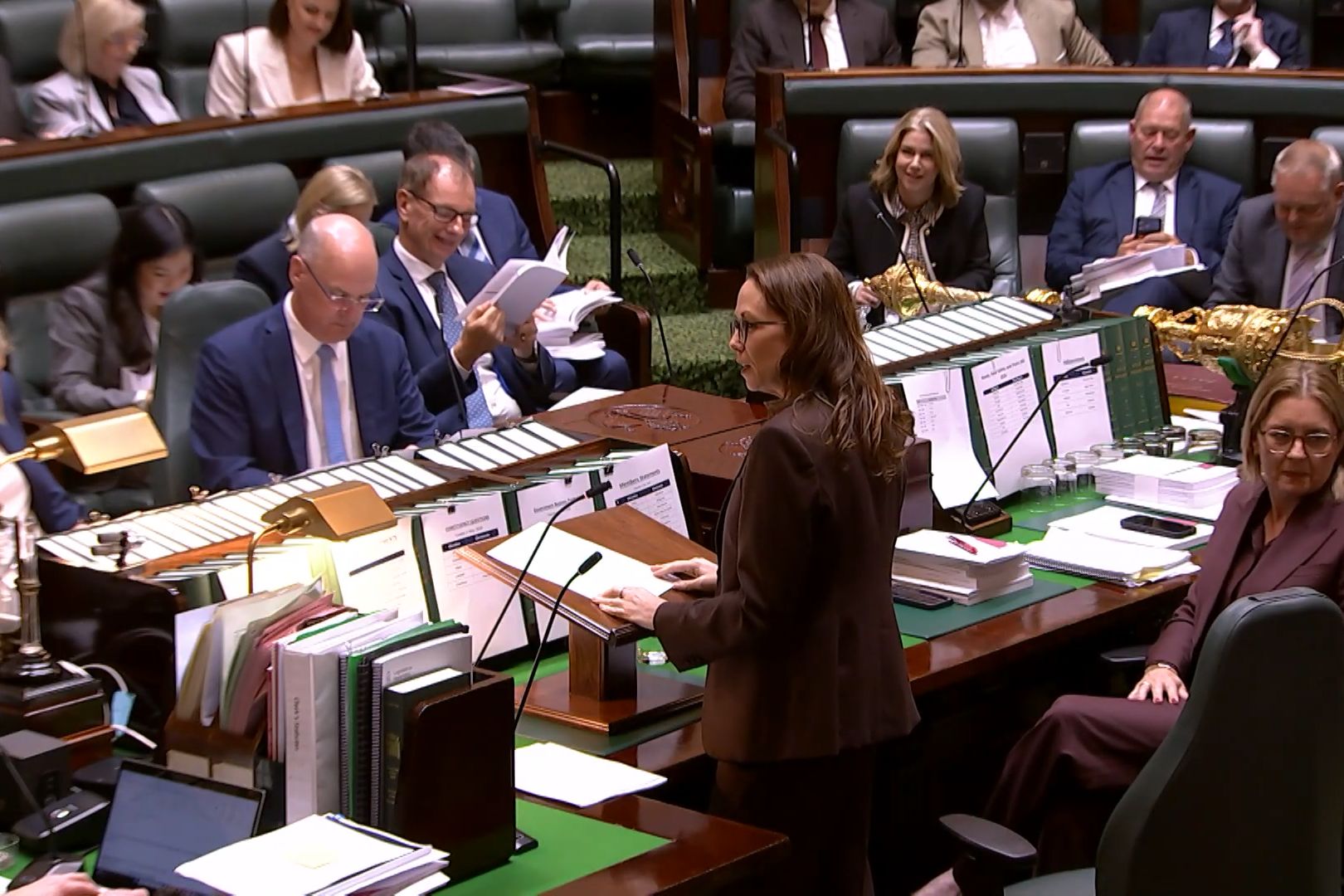
WITH ballooning state debt and an election looming later this year, Victorian treasurer, Jaclyn Symes, delivered the 2026 State Budget on Tuesday, May 5, calling it “disciplined” and highlighting the “first operating surplus in seven years" at more than $700 million for 2025-26.
However, the Opposition and financial analysts were quick to point this was achieved via a $1.15 billion 40-year licence extension, normally 10 years, to The Lottery Corporation.
Lowan MP Emma Kealy slammed it as “a legacy of debt” and said the budget “cuts agriculture funding by 4.7 per cent when our farmers need more investment, not less.”
Horsham Rural City Council mayor Brian Klowss said he was “disappointed with this week’s budget announcement, which sees the gap between regional areas and the city widening.”
“The $20 million ‘Future Regions’ program is said to support enabling infrastructure for new housing, upgrading community facilities and attracting more private investment; however, this is only the start, and a much larger allocation is needed,” he said.
“As we head towards the 2026 state government elections, we hope the major parties recognise that regional areas are doing the heavy lifting when it comes to providing renewable energy, food security and mining royalties, and we need and deserve investment to help our towns and communities.”
Business association group, Pitcher Partners, said it was “best described as a classic election year budget, which is big on voter handouts and light on any significant reforms that will make a difference to Victorian businesses”.
Meanwhile, Victorian Council of Social Service (VCOSS), welcomed “a State Budget that responds to the pressures Victorians are facing … while acknowledging that it does not yet match the full scale of the challenge”.
The government’s allocations for regional Victoria highlighted several categories – health, education, transport, infrastructure and emergency services, along with business and policing – and made a particular focus on farming.
Although the Victorian Farmers Federation summed it up as “kick(ing) the can down the road during an election year” they still welcomed some of the announcements:
• $5.9 million for farmer and rural mental health support, wellbeing and safety, including funding for the National Centre for Farmer Health and for the Rural Financial Counselling Service.
• $7.6 million biosecurity investment.
• $4.9 agricultural sector electrification and emissions reductions.
• $12.7 million to build more CFA fire stations.
• $75 million for the Regional Health Infrastructure Fund.
• $127 million to improve the flow of regional freight rail.
Agricultural infrastructure and roads
Pointing out that agriculture provided $22 billion annually to the Victorian economy, VFF acting president, Peter Star, said the overall $84 million investment was not commensurate with the sector’s importance and said it “must be dramatically increased”.
“We need a roadmap to grow and build for the future,” he said.
“Victorian farmers and regional Victorians are doing it extremely tough in the face of sustained drought and exploding cost pressures with ongoing overseas tensions.
“During this election year, we’re expecting to see much more support in the months ahead.
“Help at the farm gate eventually flows to consumers, and it’s a win-win during a cost-of-living crisis to get the support to primary producers who are being forced to pass on these huge price increases.”
The VFF also restated their opposition to the Emergency Services Levy and called for it “to be scrapped entirely".
The Government also announced a “record” $1.04 billion road maintenance allocation as “funding the biggest roads blitz in the state’s history”, with 70 per cent of that specifically earmarked for regional Victoria repairs.
Mr Klowss said HRCC were still working through the details of what was included in the roads budget.
“While there may be one or two road projects funded, the early announcement of the billion-dollar allocation for road maintenance largely reflects existing spending rather than new investment, and remains nowhere near enough to address the declining condition of regional roads,” he said.
Regional Cities Victoria echoed the sentiment and had a specific increase in mind.
“Without a serious funding uplift – starting around $500 million more each year – regional roads will continue to fall behind,” their media statement claimed.
“RCV is calling for a $2 billion regional roads package over four years, on top of existing funding, to make roads safe and reliable.”
Regional healthcare
Named regional healthcare centres to received specified funding included major locations such as Ballarat, Geelong (Barwon Health), Warrnambool and Shepparton, but Horsham and other smaller towns can only look to the $75 million allocation to the Regional Health Infrastructure Fund as a potential source, for projects ranging from operating theatre refurbishments to equipment upgrades.
The Australian Nursing and Midwifery Federation had some praise for funding for health-specific WorkSafe inspectors and $15.1 million over four years to increase the nursing workforce in non-government aged care.
“This budget will also deliver 250 additional graduate nursing and midwifery places,” ANMF secretary, Maddy Harradence, said.
“ANMF has been campaigning for additional graduate positions after many recently graduated nurses and midwives did not receive a confirmed graduate position in 2026.”
Housing
Master Builders Victoria welcomed some elements of the 2026-27 Victorian State Budget, and chief executive, Michaela Lihou, said that while she appreciated the Government’s focus on living affordability, they had hoped for broader stimulus for the building industry, particularly amid price volatility and sector-wide uncertainty.
Support for the delivery of new homes in the Budget was limited to extending the stamp duty concession for consumers who buy off the plan for townhouses, apartments and units.
MBV was pleased the concession had been extended for 12 months, but was disappointed that it was not expanded to include new houses.
The Community Housing Industry Association Victoria said the budget “will change the lives of thousands of families priced out of the private rental market”.
The government added an initial $860 million to the Social Housing Growth Fund, which will go towards building 7000 extra community housing dwellings over the coming decade.
The budget also increased support for Tenancy Plus by $6 million, to help renters who need support to stay housed.
However, the Budget failed to restore funding first promised in the 2021-22 Budget to support 2000 social housing renters living with mental illness.
“This is a budget that will change the lives of thousands of Victorians who are priced out of the private rental market and struggling to make ends meet,” CHIA Vic chief executive, Sarah Toohey, said.
Debt burden growing
Like many others, minor party Family First pointed to the continued growth of Victorian debt and noted that some funding details had been withheld, suggesting they were for election campaigning later this year.
“(Tuesday’s) budget confirms Victoria’s net debt will reach $199.3 billion by June 2030 – almost ten times higher than when Daniel Andrews came to power in 2014,” their statement said.
“The Allan Government has also stashed away an election war chest of up to $70 billion – comprising $37.6 billion in unallocated spending and $32 billion in future investments – to bankroll election promises ahead of the November vote.”
The Institute of Public Affairs also made the election connection.
“The Allan government has produced a surplus in name only, seemingly to hoodwink Victorians ahead of this year’s election,” IPA research fellow Saxon Davidson said.
“A surplus which sees debt rise is no surplus at all, and it will be the next generation of Victorians who pay the price.”
Opposition leader Jess Wilson listed crime rates, ambulance wait times, and the $15 billion “lost to corruption and the CFMEU on major projects” as elements not addressed.
“What really concerns me is where this is heading,” she said.
“In the coming years, interest on the debt is set to reach $1 million every hour. We are already spending more on state debt interest payments than on police, ambulances, and kindergartens combined.”
Mr Klowss said he was disappointed the State Government appeared to have significant plans for the region, but wasn’t prepared to back the need for infrastructure required with them.
“Wimmera Southern Mallee Council areas are identified for major renewable energy and critical mineral projects, yet there is no investment to help the region prepare for the growth associated with these proposals,” he said.
“How will we support future workforces with housing and services without the accompanying investment?”