General News
15 May, 2026
Regional pressure builds: Budget divides city and rural again
Regional councils, farmers and rural services are weighing the fine print of the federal budget, with concerns emerging over infrastructure costs, communications funding and drought support.
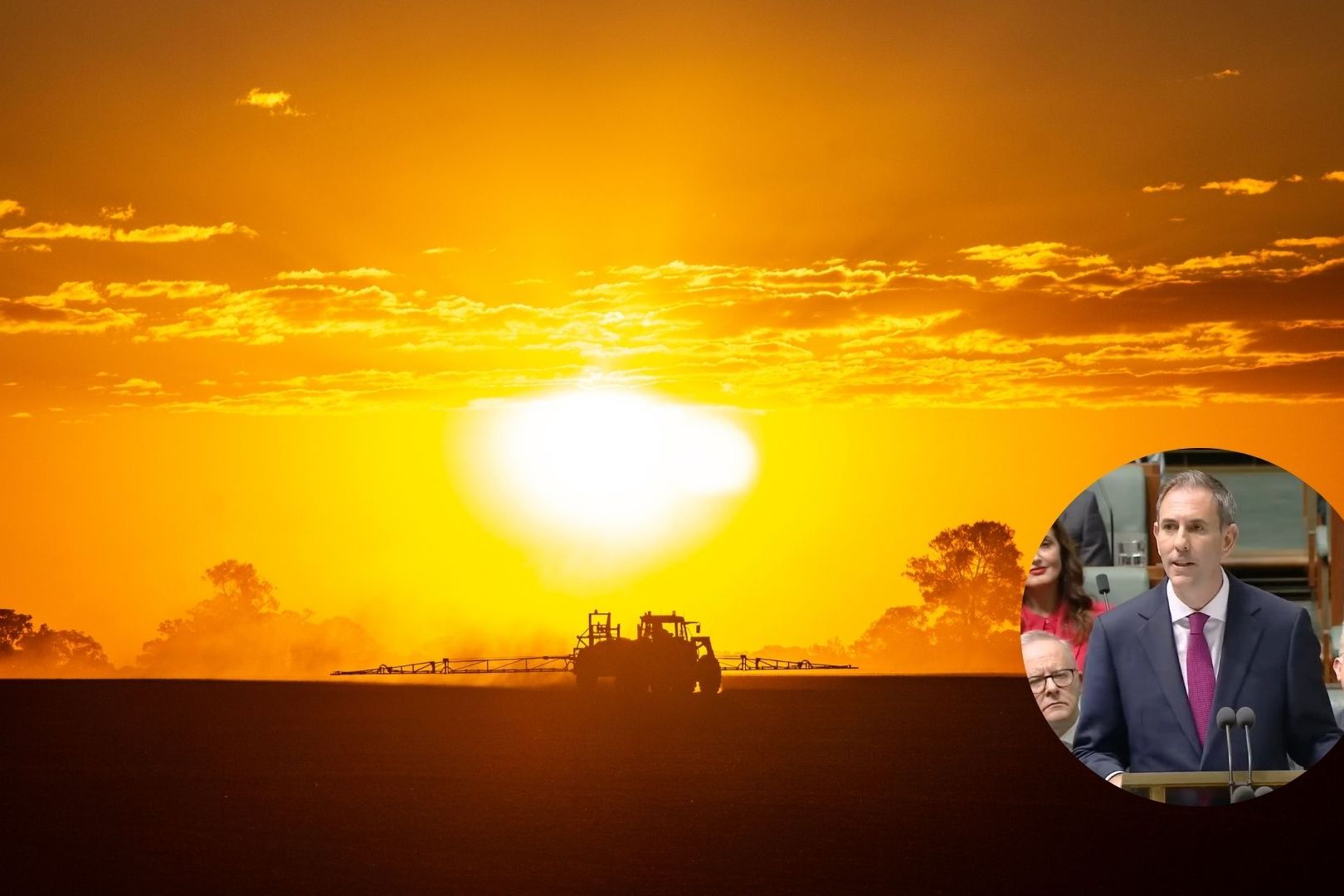
FOLLOWING the 2026/27 Federal Budget delivery on Tuesday evening by Treasurer Jim Chalmers, the considerable national news focus on the government’s policy backflip with capital gains tax and negative gearing affecting housing in dense population areas generally overshadowed the differing concerns for regional areas and the agricultural industry.
These include hidden costs of federal infrastructure mandates offloaded onto regional councils, the future of transport networks including roads, support for regional telecommunications, industry fuel and fertiliser resilience, and drought grant reductions for farmers.
The Federal Government’s announcement of a $2 billion Local Infrastructure Fund to support utility companies and councils to deliver enabling infrastructure for new housing has received a generally positive response from regional councils.
The fund is designed to unlock housing supply by supporting essential infrastructure such as water, power, sewerage, and access roads for new homes and developments.
It allocates $500 million specifically to regional areas, with concerns about the amounts allocated to smaller rural shires.
While the LIF offers a pathway for development, the broader fiscal settlement for local government was less expansive; $2.9 billion has been brought forward in Financial Assistance Grants, representing 80 per cent of the 2026-27 entitlement – to hit council ledgers before the end of the financial year.
While this will provide an immediate boost to help manage short-term cash flow pressures, it may risk creating a ‘funding cliff’ next year.
Additionally, accelerating transmission and energy infrastructure development across Western Victoria to meet Net Zero targets has raised concerns about increased administrative costs.
Regulatory requirements, such as the Environmental Effects Statement process, are increasingly viewed as costs being pushed directly onto local government and ratepayers.
There has been growing support among rural leadership for a direct federal ‘infrastructure impact levy’ on large-scale grid project proponents to ensure that the financial and resource burden of these national projects does not fall on small rural shires.
VFF reaction
The potential for a generational farm to be passed on to children will likely become more difficult to realise under Tuesday’s budget, with the CGT changes, and many are raising concerns about how this will play out.
VFF acting president Peter Star said the gap between what a farm was worth on paper and what it earns has never been wider.
“Farmland is not like any other asset,” he said.
“It is held and handed down, not bought to flip, traded for capital growth, or sold at the top of the market.
“It is a working asset, stewarded across generations specifically, so it does not need to be sold. Governments need to understand that distinction before they reach for the tax lever.
“When a farm passes between generations, limited money changes hands, and no income is realised, and no buyer arrives with a cheque.
“To tax that transfer as if it were a sale invents a gain that does not exist and sends the bill to the next generation before they have planted their first crop. That is an inheritance tax by another name, and Australia abolished those decades ago for a very good reason.”
Communication and health gaps
Telecommunications support also took a hit in the budget, with funding for the Regional Tech Hub not renewed.
The service was established in December 2020 following recommendations from the 2018 Regional Telecommunications Independent Review to address the unique needs of rural customers, as standard information from telcos is often inaccurate or unhelpful.
In her own highly critical response to the budget, Mallee MP, Anne Webster, was especially scathing of this detail, saying the program “was helping regional Australians every day stay connected in their business, in telehealth, studying online or ensuring Triple Zero connectivity” and wondering about the future of the Mobile Blackspot program.
“Mallee constituents are still coming to me about having no connectivity after Labor’s botched 3G shutdown, and Labor are not investing adequately in improving life-saving and productivity-lifting connectivity,” she said.
As Shadow Minister for Regional Health and Regional Communications, Dr Webster also lamented the lack of Commonwealth investment in improving regional health outcomes.
“Labor continues to pour money into funding metro-focussed models of health like UCCs (Urgent Care Clinics), and additional money to the states to fund hospitals, but repeatedly fails to invest into new regional initiatives,” she said.
NFF reaction
Like many other agricultural stakeholders, the National Farmers Federation also saw the budget as “a mixed bag for ag”,
It pointed to a $10 billion fuel package to improve domestic fuel and fertiliser resilience for the industry, but cited another loss in the $191.6 million cut from the Department of Agriculture, Fisheries and Forestry.
The NFF pointed $387 million of funding for disease preparedness with the CSIRO and Australian Centre, along with $8.7 million for the Australian Pesticides and Veterinary Medicines Authority.
However, the NFF contrasted the VFF and took a more positive view of the changes to the CGT, focusing more on the immediate ‘wins’ – specifically that primary production income will remain exempt from the new 30 per cent trust tax, and that existing small business CGT concessions have been preserved for now.
The divergence has highlighted how Tuesday’s budget may further complicate the growing tension between protecting the annual operating profit and securing a family farm’s long-term future.
Agricultural grants reduced
In a general blow to the ag industry, several grant programs have had their funding cut: $104.6 million over five years by reducing uncommitted funding across grant programs including: Pest and Disease Preparedness and Response, Wine Tourism and Cellar Door, Agriculture and Land Sectors – low emissions future, Accelerated Adoption of Wood Processing Innovation, Support for Regional Trade Events, Empowering Australia (seaweed farming), and other trade-related grant programs.
The Future Drought Fund will also be reduced by $52 million over four years, and the Natural Heritage Trust agriculture stream by $35 million from 2028–29.
Summary
Competing perspectives – be they between short- and long-term considerations and between city and rural concerns – underscore the difficulty of reconciling the budget with the specific needs of rural electorates.
The dichotomy between the government’s focus on short-term liquidity, such as the early release of Financial Assistance Grants, and the long-term operational costs faced by regional councils and primary producers remains a central point of tension.
As regional governments and agricultural industry stakeholders continue to review the fine print, the budget has revealed a clear shift in priorities: a move toward macroeconomic resilience and large-scale industrial infrastructure, often at the expense of regionally specific support services and historic funding models.