General News
6 September, 2023
Private Joseph Alexander Orr
When Joseph Alexander Orr enlisted, he left his grandparents who raised him since he was three months old. He had not yet turned 20. Joseph was born in February 1898 in Wycheproof to Joseph Alexander and Suzanna Jane (née Baker) Orr. He had two...
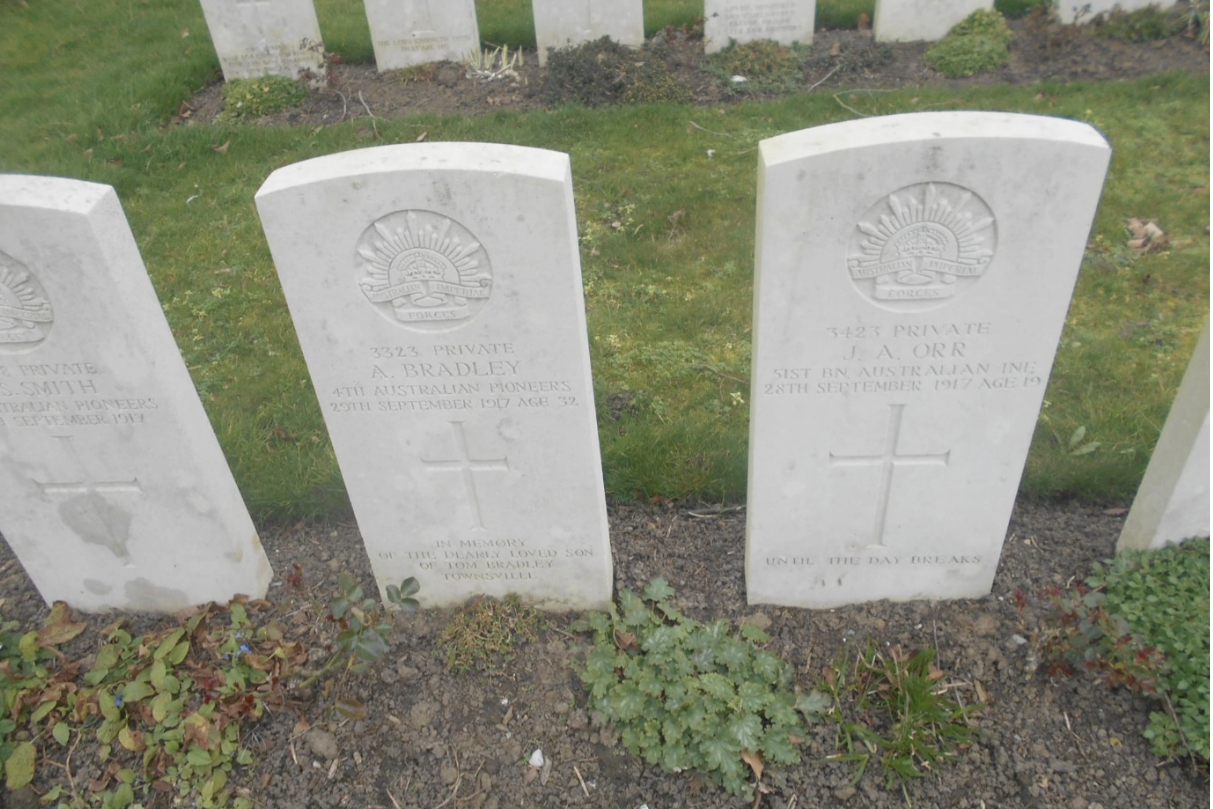
When Joseph Alexander Orr enlisted, he left his grandparents who raised him since he was three months old.
He had not yet turned 20.
Joseph was born in February 1898 in Wycheproof to Joseph Alexander and Suzanna Jane (née Baker) Orr.
He had two sisters, Myrtle Rebecca (1895–1980) and Anne Mabel (1897–1991).
Joseph had the misfortune to lose his mother when he was still a newborn baby.
Hid father was very affected by the loss of his wife and did not feel able to take care of an infant only a few months of age and his sisters of one and three years old.
The children, therefore, went into the care of their maternal grandparents, John and Mary Baker.
This involved leaving their family home and settling in their grandparents' house in Katanning, Western Australian.
Joseph attended Katanning State School with his sisters.
As he got older, he began to learn blacksmithing from a local professional until war interrupted this in the summer of 1914.
Joseph, then aged 16, decided to continue to perfect his craft instead of trying to enlist when his application would almost certainly have been refused because he was underage.
Two years later, by then almost 19 years old, he did volunteer.
Joseph reported on November 30 1916 at a recruiting office in Black Boy Hill, WA.
After passing his medical examination, he went to 13 Training Battalion, where he followed basic military training in, among other things, the use of rifles and light weapons as well as the use of a first aid kit and gasmask.
Joseph’s service number was 3423 and his next of kin was his older sister, Miss Myrtle Orr, Katanning, WA.
His occupation was recorded as striker and his location on enlistment was Bay Street, Katanning.
As a private, he sailed on January 29 1917 from Fremantle aboard HMAT (A28) Miltiades as a private in the 51st Infantry Battalion, 9th Reinforcements.
The crossing was the epic of a lifetime for young men like Joseph, unaccustomed to long journeys and who rarely had the opportunity to go beyond the limits of their country.
On board, officers wanted to prevent the men sinking into boredom and idleness.
They therefore subjected them to regular drills and frequent physical exercise.
They encouraged recreational activities aimed at keeping the men busy with sports such as wrestling and boxing and public chores such as cleaning decks and preparing vegatables for the kitchen, and cleaning their uniforms and other clothing.
Seasickness affected many of the new recruits and did not allow them to enjoy the three hearty meals served daily onboard the ship.
Miltiades docked about six weeks later in the Port of Plymouth, Devon, England.
On disembarking, the men went to training camps in the area (Codford) to receive training in life and safety in the trenches and the work and drugery necessary to keep trenches in good condition.
They also underwent physical training preparing them for fatigue caused by long sleepness nights at the front.
They were assigned to a calmer sector of the front in the region of Armentiers to acclimatise to the conditions of war in Europe.
The men then moved to nearby Belguim and were reunited with 51st Infantry Battalion in the Ypres sector in anticipation of attacks that were being planned for the summer of 1917.
Joseph and his battalion were engaged in the attack on Polygon Wood which began on September 26 1917.
He survived the first wave of the assault and the fighting in the days that followed.
He was in the trenches of the front line during a German counter-attack on September 28.
The British troops came under heavy bombardment and heavy machine gun fire as they occupied positions newly acquired and therefore not fitted out or secure.
Joseph was struck and died instantly there, at the age of 19.
His place of death was recorded as Ypres, Belguim.
His full service record states that he was buried at Weathock, close to Pitt Box Cemetery, grave 14, D5, east of Ypres.
Joseph now lies in Hooge Crater Cemetery in Plot XIV, Row D, Grave No 4, Ypres Salient, Zillebeke (also listed as Passchendaele, West Fladers), Belguim.
The personal inscription on his headstone reads “Until the day Breaks”.
After the circumstances of his upbringing came to light, his grandmother Mary, who had raised him, received his medals – the British War Medal and the Victory Medal – and his sister Myrtle was named in his will as his eldest surviving sibling.
Joseph Alexander Orr’s name is on panel 153 in the Commemorative Area at the Australian War Memorial.