General News
30 January, 2023
President of two shires
Described as a man who enjoyed the familiarity and comfort of home, George Armstrong rarely saw a need to venture outside his district. Within it, however, he was an active community member who contributed to not only one but two shire councils and...
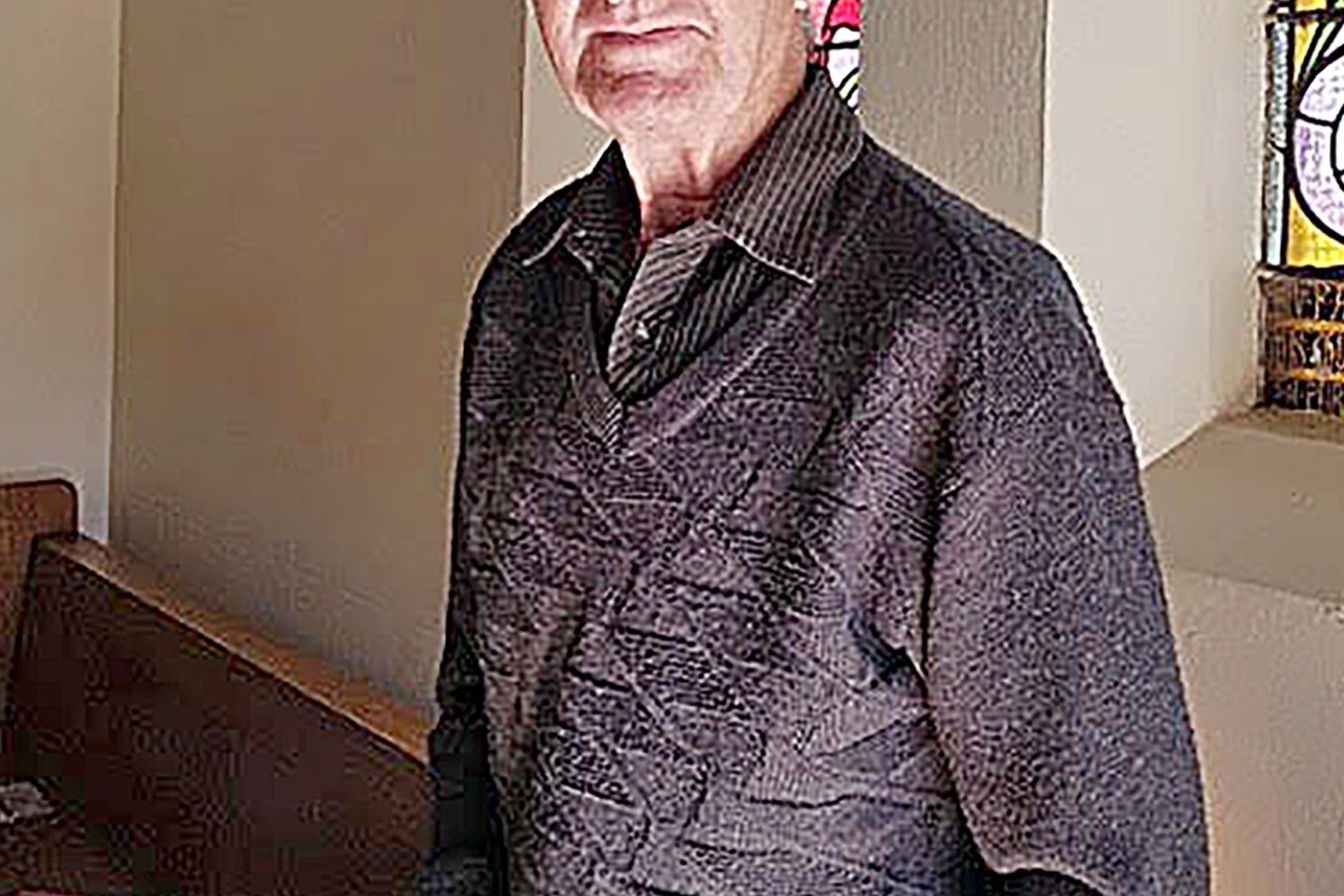
Described as a man who enjoyed the familiarity and comfort of home, George Armstrong rarely saw a need to venture outside his district.
Within it, however, he was an active community member who contributed to not only one but two shire councils and a lengthy list of other organisations.
William George Armstrong – soon to be known as George – was born in Horsham on November 5, 1932, to William Percy and Elsie Myrtle (née Smith) Armstrong.
He had an older sister, Valma; a younger sister, Faye, was later added to the family.
George attended Kewell North Primary School and Warracknabeal High School before joining his father in managing their property at Kellalac.
Having lived all of his life at Kellalac and doing business in Warracknabeal, he was “very comfortable with what he knew and the environment around him”.
He did occasionally see other parts of the world but holidays were not the norm for George as they were said to be “out of his comfort zone”.
However, while holidaying in Sydney he met the girl he would marry in March 1958: Beverley Kay Oldman, known as Kay.
The couple’s first child, Terrie Maree, was born in November 1959 and over the years she gained five brothers and sisters: Graeme, Karen, Robyn, Rodney and Jeffrey.
George’s sporting years saw him involved in the Kellalac tennis and cricket teams and he played football briefly for Warracknabeal before entering local government.
He became a councillor in Warracknabeal in 1964, taking over from his father, and he was shire president and a justice of the peace in 1974, then later a councillor in Wimmera Shire where, on the retirement of Jack Kranz, he became shire president in 1988-89.
Describing his farming methods as “conservative” would be deemed a compliment, and it would not be stretching the truth to suggest he was set in his ways or even stubborn, his family said.
However, “If one even thought along these lines, best get someone else to tell him”.
Until his later years he was very involved with community events as well as the farm.
He completed the Australian military National Service, as a Nasho, later becoming a member of Warracknabeal Anglican Parish Council, North Wimmera fire brigade, the Wallup and Horsham pipe bands, and Warracknabeal High School council.
George and his wife Kay trained debutantes and their partners in 1986 and again in 1987.
He was the Warracknabeal town crier for several years but one of his most memorable moments was his run in the Queen’s Baton Relay for the Commonwealth Games in 2006.
He was physically strong and suffered little from the usual ailments that appear after age 50.
George was lucky – very lucky – on two occasions of note.
He was pushing up timber with his red Massey tractor, not aware of a big branch above him, which came crashing down beside him so that he had to worm his way out – “there were no cabins or roll-bars back then”, his family noted.
The second incident involved a motor bike – there were plenty to choose from throughout his life.
With his family unaware of his intentions, he set off after dinner one night to check the sheep in 300 acres of barley stubble.
He became acquainted with the ground, with the bike on top of him.
Broken bones?
No!
George wriggled out and, despite an aching leg, kicked the bike back into life and finished the job.
Not even his 90th birthday could stop him imagining carting grain to Murtoa, despite the fact he had lost his licence years before due to ill health.
That he was struggling health-wise eventually became obvious and the farm was no longer a suitable place for him to live.
He was admitted as a patient to Wimmera Base Hospital for 8.5 months and, as this period coincided with the COVID-19 pandemic, visiting hours were restricted to half an hour per day strictly for family members.
Such limitations had a heavy impact on George and he claimed the walls of his room were closing in on him.
His family knew it was time to look for other accommodation and, after some initial setbacks, they received a call from Hammond Care in Caulfield.
The Armstrongs’ first reaction was to think of the distance to Melbourne, but they managed, and they quickly agreed that Hammond Care was “well worth the effort”.
George’s new home was a series of cottages in a garden setting, where a pleasant atmosphere was the result for both patients and visitors.
Nursing and domestic staff looked after George well and encouraged his family to liaise with counsellors and pastoral care teams as they “journeyed with George along his end-of-life pathway”.
George died on December 21 last year, survived by his wife of 64 years, Kay, and their six children, and by his sister Faye.
In a tribute read during his funeral service in the Anglican Church, Warracknabeal, on January 3, the Armstrong family said: “It would be right to say what George had so much trouble saying: ‘Thank you for helping'.”
The family voiced thanks on his behalf to the doctors and staff of Warracknabeal Hospital; the geriatricians, dementia support teams and staff of Wimmera Base Hospital; dentists, optometrists, audiologists, police, ambulance officers and friends; and all those who for years comforted and helped George in many ways to which he was oblivious.
The Armstrongs also thanked the Reverend James Wood, Michael and John Gardiner, Jenny and Ken Taylor for their music, Father Michael Boyle, the caterers and floral art providers, and all who had gathered to farewell George.