General News
25 June, 2024
Jochinke: rail freight the future
The Wimmera's agricultural fortunes are unpredictable at the best of times - but a future reinstating rail as a major commodity carrier will give the region the best possible outcome, a high-level transport and logistics forum in Horsham has heard.
National Farmers' Federation president David Jochinke, speaking online to Horsham Performing Arts Centre from a carbon forum in the Netherlands, told the audience the event allowed the Wimmera a unique opportunity to showcase the importance of agriculture to its economic development.
It also offered an opportunity to showcase the freight terminal at Dooen and its value to the region and agriculture, he said.
Mr Jochinke was speaking at the 50th anniversary of national company Specialised Container Transport (SCT), whose assets include Wimmera Agricultural Logistics Hub at Dooen, purchased in 2013.
Horsham business people Rodney and Jenny Clarke originally established a freight container business on vacant land near Horsham Railway Station.
SCT now employs more than 1000 staff and is Australia's biggest privately owned logistics rail company operator.
Its Horsham facility is ideally suited to the Melbourne-Adelaide-Perth links.
Mr Jochinke was one of several speakers at the forum, which also included Horsham Rural City Council mayor Cr Robyn Gulline, Port of Melbourne business development head Leatrice Trehorne, SCT founder and director Peter Smith, SCT ports and development relations general manager Matt Eryurek, and HRCC investment attraction and growth manager Fiona Gormann.
Earlier, the public had a chance to visit the usually off-bounds freight terminal at Dooen and hear from Horsham officials as well as national managers.
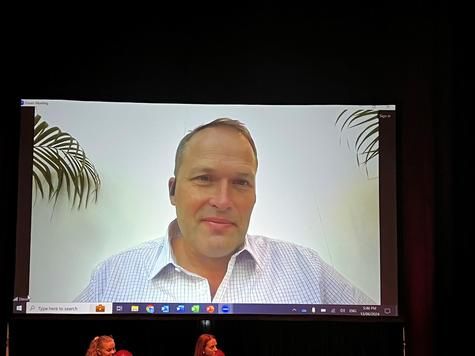
Mr Jochinke said attending the Gtech conference in Rotterdam had made him more aware that producers needed to know where they fitted into the food chain and take responsibility for the carbon footprint they created.
He said freight cost for all farmers was significant and SCT offered great opportunity to send freight to ports while reducing road traffic and road wear and tear.
Railing freight was also a safer option for road users, he said.
A $150 million upgrade of the line from Maroona near Ararat to Portland would also prove invaluable to producers, Mr Jochinke said.
"Roads are a challenge to councils and governments and having a rail facility is very important to us."
Mr Jochinke said other Wimmera industries such as plant-based protein production were also considering rail freight over road transport.
However, port costs needed to be kept in check.
A good rail network also allowed farmers to consider crops not traditionally grown in the region and encourage food packaging manufacturers to set up in the Wimmera and southern Mallee, Mr Jochinke said.
Keeping rail facilities well maintained and to the appropriate standards was also a necessity.
"We're an export nation and we will continue that way," he said.
"There's still many blue-sky opportunities out there."