General News
13 February, 2025
Grampians animals recovering from bushfire given habitat pods for shelter
Parks Victoria installed 160 habitat pobs in the firescar.
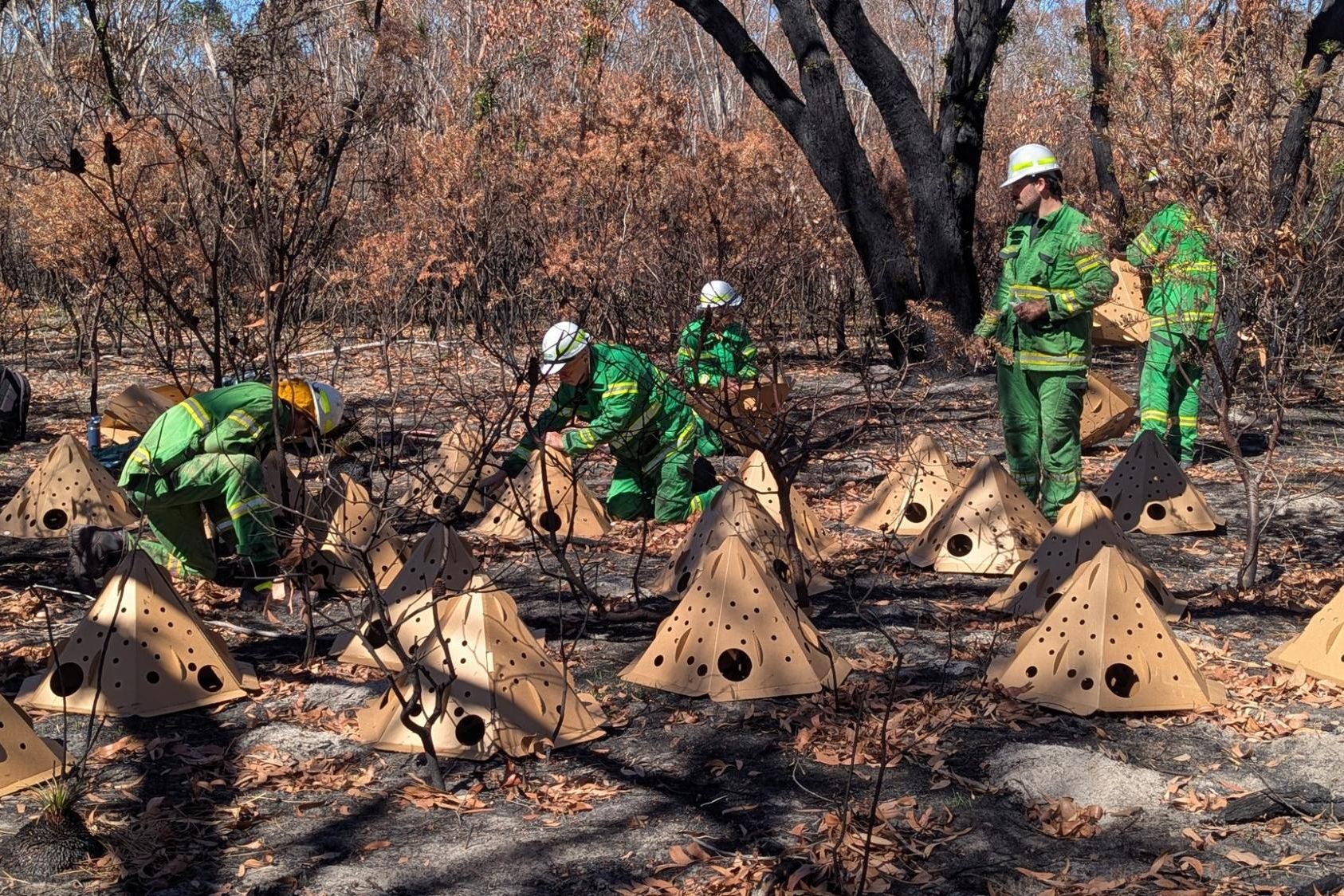
Animals impacted by the recent Yarram Gap fire in the Grampians (Gariwerd) National Park have been given some welcomed relief and habitat support as they navigate their bushfire recovery.
On Friday, January 31, several Parks Victoria field officers left 160 habitat pods at two high-value conservation sites impacted in the Yarram Gap fire scar for animals in need of shelter.
Alongside the pods, 20 cameras were placed across the landscape to monitor fauna activity and observe how recovering critters might use the newly deployed artificial habitat.
Both deployments present a great opportunity to see how effective the pods are and to monitor a variety of threatened species.
Parks Victoria Field Officer Marcello Bold said it is still early days in fire recovery in the Yarram Gap footprint, but it is an encouraging start and one that has involved a great deal of planning, preparation and implementation.
"We'll be back out in around a month or so to see how the pods are faring in the weather and to see if the cameras have recorded any of our target species, such as long-nosed potoroo and southern brown bandicoot," he said.
"We also observed some fresh bandicoot diggings at the Dwyers Creek site which was a promising sign amongst the devastation."
Mr Bold will be out deploying cameras at control sites this week to draw comparisons to the recently deployed pods of small mammal activity.
"We still have another 160 pods ready to deploy here in the Halls Gap office. Once it is deemed safe, we will aim to deploy these pods in the lowlands of the Victoria Range and in the upper catchment area of the Glenelg River," he said.
"This area was the last remaining stronghold of long-nosed potoroos in the park following the Yarram Gap fire.
"It will be critical to monitor this population's possible survival and recovery, and utilise all tools available such as habitat pods and predator control to protect any surviving individuals."
The cameras have already captured red foxes, yellowed footed antechinus' and feral cats with further findings to come.
Although this is just one method, any habitat support and monitoring will help support our threatened species recover.