General News
8 July, 2025
GCH to end drink driver program
Grampians Community Health (GCH) will no longer offer a drink and drug driver behaviour change program face-to-face for locals after a significant drop-off in participant numbers.
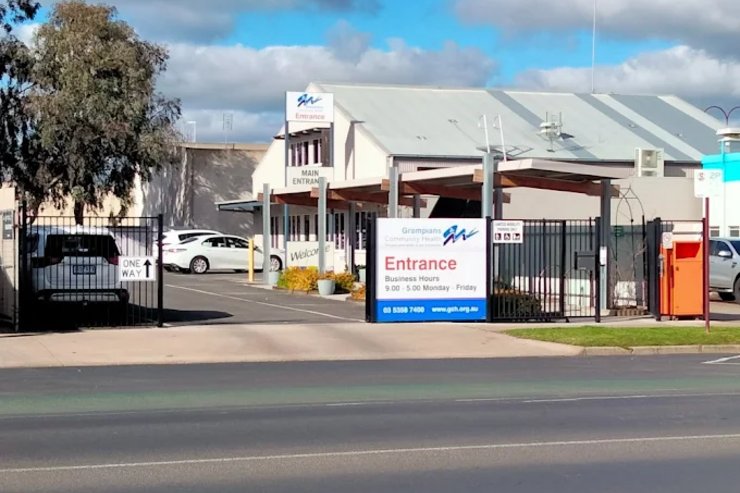
Servicing the Grampians-Wimmera region, the program will make the move to online amid concerns about the program failing to achieve its goals and difficulties for rural people without a licence to access and afford the service.
GCH general manager of community services Faith Hardman said that while the local program was ending, ironically this would make it easier for more local people to access the service.
“We have to deliver face-to-face, which can be very difficult for people in rural areas, but now
people will be able to access the program online,” she said.
The program is overseen by VicRoads under the Road Safety Act and has been running in
Maryborough, Hamilton and Horsham and was previously in St Arnaud, Ararat and Stawell.
It had been reaching up to 400 participants a year, but dropped to 317 in 2022-23, 242 in 2023-24
and 189 in 2024-25.
“Over the past three years, we have seen a significant decline in participants,” Ms Hardman said.
“This year we have cancelled courses in nearly every location nearly every month.”
A substantial reduction in numbers using the service has led to fears that many people in remote
areas may be not be going through the process of getting their licence back.
During Covid, GCH was allowed to deliver the program online and it was successful, but after the pandemic it was required to revert to face-to-face sessions.
Completing a behaviour change program is a requirement for anyone who's committed either a drink or drug driving offence before they can apply to get their licence back.
Those needing to participant have to seek consent from VicRoads to do the course online or in person.
The standard program is a six-hour course delivered over three days with an individual counselling session, while an intensive program is nine-hours plus counselling.
The standard program costs $400, concession $356, the intensive program $780 and a mandatory interlock removal course $200.
“It is part of the consequences of drink driving, but for many it is an inaccessible program because of the cost,” Ms Hardman said.
“There has been a drop-off in attendance, but there has not been a drop off in the number of people drink and drug driving, which leaves us to worry that more people are taking the risk of driving unlicensed.
“Cost of living is a big part of that, but in remote areas, people may be risking it, even though it is
punishable by jail.”
GCH has been concerned about the effectiveness of the program.
“We see the same people going through again and again so we have to question its value,” Ms Hardman said.
“VicRoads believes it is more effective delivered in person and in a group setting but our ability to deliver the program effectively and efficiently has been stymied because we have to cater to a complicated bus timetable in every location for people to come to the sessions.
"We have reliable public transport but it doesn’t cover the whole region.
“VicRoads is looking for accountability in a group learning setting, but what we have witnessed is
people are not attending in rural and remote regions and for those that do, there is frustration and
disappointment with people not changing their actions.”
Ms Hardman said complications in the qualifications required for delivering the course added to the cost pressure.
She said GCH had made a substantial financial loss delivering the program over the past five years.
“We’re now in a tough fiscal environment where we can no longer prop up the program at the
expense of others, especially when people book but don’t turn up," Ms Hardman said.
“We cover a significant geographic area with this program and don’t have the simple scenario where people can just walk into a program.
"We have to get over lots of barriers such as the cost-of-living crisis, distance and transport to get people in the doors which makes the viability really challenging.
“We have to step outside a city-based mentality to help our community.”
The program will run until the end of July when all current registered participants finish the course.
Local residents needing to undertake the course after this date can do so by finding an online course provider on the Department of Transport Victoria website.