General News
21 November, 2023
Fishing for answers to yellowbelly riddle
Wimmera Catchment Management Authority (CMA) is calling on the community to participate in a research project involving a popular native fish: yellowbelly. Wimmera River users visiting areas around the Dimboola, Horsham and Jeparit weirs are invited...
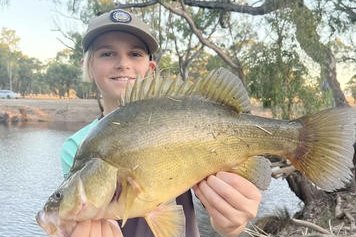
Wimmera Catchment Management Authority (CMA) is calling on the community to participate in a research project involvingapopular native fish: yellowbelly.
Wimmera River users visiting areas around the Dimboola, Horsham and Jeparit weirs are invited to become citizen-science monitors over the next few weeks.
The CMA is specifically encouraging anglers who catch yellowbelly to take note if any of their catches contain eggs or the seminal fluid, milt.
It is asking everyone else spending time in the area to look for general signs of fish spawning or fish aggregation.
Wimmera CMA chief executive Dave Brennan said the Wimmera River was home for a wide range of freshwater fish.
“Fish play important environmental and recreational roles in Wimmera waterways and there is always a need to build understanding about their lifecycle in our region,” he said.
Yellowbelly, also known as golden perch or callop, are sought-afterby anglers and the subject of widespread stocking programs across south-eastern Australia.In November 2021 there was yellowbelly spawning activity in the Wimmera River.
An annual Native FishReportCard monitoring survey in April 2022detected higher numbers ofjuvenile yellowbelly, indicating a successful breeding event.
This was an unusual occurrence because yellowbelly arenotknown to breed in the Wimmera River.
The CMA’s research will explore the use of water to mimic these environmental conditions.
“We had planned to pursue this research in spring last year but the wet spring and flooding conditions prevented this occurring,” Mr Brennan said.
“If we can replicate the conditions that stimulate these fish to breed naturally it will be a game-changerlocallyfor fish breeding, how we use water fortheenvironment and the promotion of angling opportunities in the river.”
CMA staffhave been monitoring water temperatures and planned a delivery of 150 megalitres a day for the environment from Taylors Lake between November 9 and 15.
The flow will then be reduced to 20ML a day.
Wimmera CMA is inviting people to provide photographs and information about what they see via an easy online form using their mobile phones.
Look for QR codes on signs, posters and the media under the title"Fishing for info".
If mobile access is unavailable on site or someone sees something interesting when they take their fish home - such as the presence of eggs and/or milt - they can go to a dedicated page on Wimmera CMA’s website to upload information: https://wcma.vic.gov.au/fishing4info
Mr Brennan encouraged people to follow Wimmera CMA’s social media accounts for updates.