Council
1 April, 2026
Council backs resource strategy
THE Horsham Rural City Councillors voted unanimously to support the implementation and advocacy of the Resource Ready North-Western Victoria Energy and Mining Impact and Readiness Strategy at its March meeting.
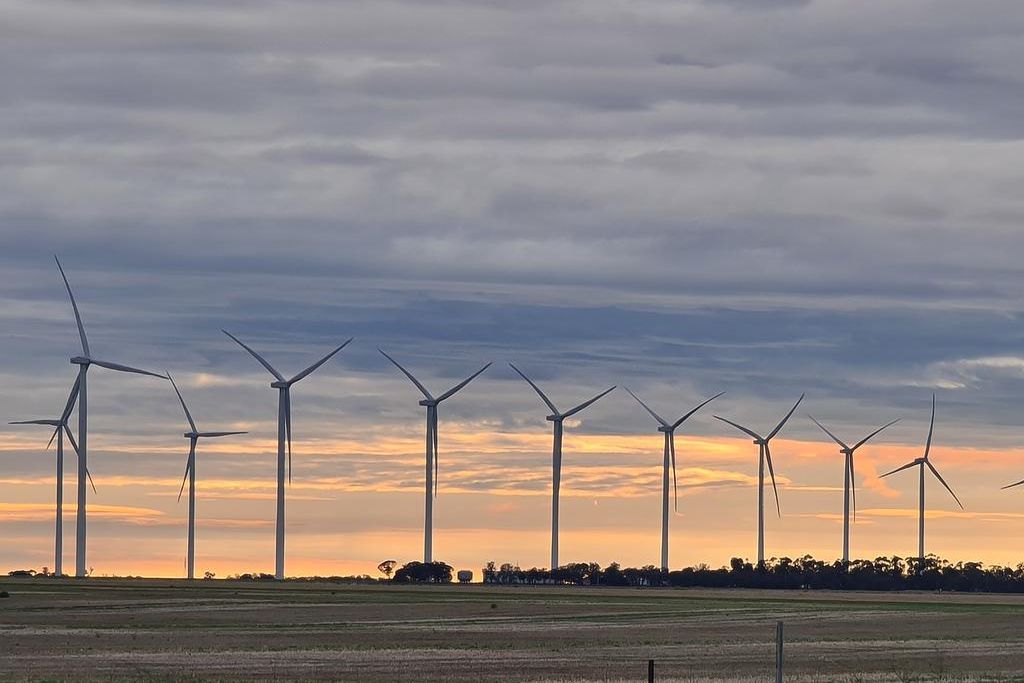
The strategy provides an analysis of the potential impacts from the $27 billion planned transmission, renewable energy, and mining projects across nine northwestern Victorian councils. Projects vary from 5 to 30 years.
The Buloke, Gannawarra, Hindmarsh, Horsham, Loddon, Northern Grampians, Swan Hill, West Wimmera, and Yarriambiack municipalities commissioned Urban Enterprise to prepare an Energy and Mining Impact and Readiness Strategy to identify the potential economic impacts and opportunities for renewable and mining projects in the region, including the VNI West transmission project estimated at $7.1b and transmission upgrades estimated at $3.37bn.
In addition, there are 33 proposed renewable energy projects (13GW+ generation capacity) and 22 mining projects of mineral sands, gold, and rare earth elements for the region.
Mayor Brian Klowss said the proposed projects had already cost the council, therefore ratepayers, up to $300,000 in associated costs, and he would rather it be used on community needs.
"That's why we need to be in conversation with the government before they go ahead with these projects. They are making decisions at our expense, and we must do whatever we can to be in the conversation,” he said.
"I hope that having a united voice with other councils will strengthen our input.”
The study area extends from the Murray River and Victorian/NSW border in the north east to the South Australian border in the west and the Grampians in the south, covering 58,503 square kilometres.
The council agenda stated, and supported by elected members, that the draft was presented to the Mining and Renewables Working Group in 2025 after desktop research and data analysis, nine council workshops, stakeholder consultation with proponents, Regional Development Victoria, Wimmera Southern Mallee Development, VicGrid, and other project proponents, plus a review of existing strategies and plans.
However, it was acknowledged that many of the actions would still require further community and stakeholder engagement.
The strategy claimed that a projected injection of $2.8 billion could be expected from the proposed projects locally, and a nine per cent increase in regional employment.
During the operational phase, an 80 per cent employment increase with $888 million annual operational expenditure.
The critical challenges, however, included labour shortages, housing demand, infrastructure pressure, agricultural impacts, community readiness, and council capacity to manage these.
Implementation of the 44 actions contained within the RRS would be subject to the availability of funding, especially from State and Federal governments, partnerships, and contributions from agencies, proponents, and institutions.
HRCC chief executive Gail Gatt said the strategy was an economic analysis undertaken by economists and reflected the council’s role in planning and preparing communities for change that may come if proposed mining and renewal projects come to the region.
"The intent of the RRS is that nine councils in the North-West of Victoria have an aligned voice to state and federal government, identifying that the Wimmera Mallee region is simply not ready for the economic transition that is being thrust upon it through current government policy associated with mining and renewable projects," she said.
"The Strategy provides some base information around the potential proposals that may come and the gaps in investment that are needed, should these proposals ever come to fruition," Ms Gatt said.
The Strategy doesn’t indicate support or opposition for a particular project; it simply states existing conditions and it is a data-based mechanism that allows councils to call for proper investment and due diligence from the state and federal government.
"Ongoing engagement with landholders and the broader community is central to that further investment and work that is needed to be done; proposed projects cross multiple council boundaries, making a coordinated, joint advocacy approach both practical and necessary," she said.
The Strategy proposes 44 evidence-based actions across eight priority themes, including community readiness, infrastructure development, housing solutions, workforce planning, and agricultural sector protection. These have been mapped to responsible departments within the state government.
"Put simply, it’s a message to the government to say you need to do more planning and invest in the region," Ms Gatt said.
"Councils are incurring significant costs in engaging in planning and compliance processes associated with project proposals, which is significantly above business-as-usual operations for any Council due to the unprecedented quantity and size of projects proposed for the region."
If councils engage in the Environmental Effects Statement process they incur a cost to do so but Ms Gatt said councils need to do this if they are going to be able to continue to represent their community and try to get the best outcomes possible.
"Councils need to be provided funds to do so," she said.